 Orions Fashion
Orions Fashion
Orions Fashion
Choosing a basketball shoe with reliable grip takes more than studying a dramatic outsole pattern. Players need to know how the rubber behaves during hard stops, quick cuts, and defensive slides. This matters even more when comparing top China basketball shoes, because outsole compounds, tread depth, and court conditions can vary widely.
A practical question guides this review: how to tell if basketball shoes have good traction without trusting marketing claims. Dr. Paul Langer, a sports podiatrist and footwear specialist, puts it clearly: “The best shoe is the one that matches the athlete, the activity, and the surface.” That principle applies to basketball traction. A shoe should feel planted, not sticky in an artificial way. On a clean indoor court, listen for a controlled squeak during a sharp stop. Then test a lateral push-off. Your foot should not slide before the rubber loads.
Look closely at the outsole. Dense rubber can improve durability, while flexible grooves help the shoe follow the floor. Dust changes everything. A strong outsole may still slip on a neglected court. Wipe the sole, repeat the test, and compare the difference. Outdoor concrete creates another problem. Softer rubber may grip well but wear quickly.
No test is perfect.
Fit also affects traction. A loose heel can make excellent rubber feel unreliable. Personally, I would not judge a shoe after one exciting sprint. Test repeated movements, inspect dust buildup, and notice whether confidence remains after twenty minutes. That small detail often reveals more than a product description.
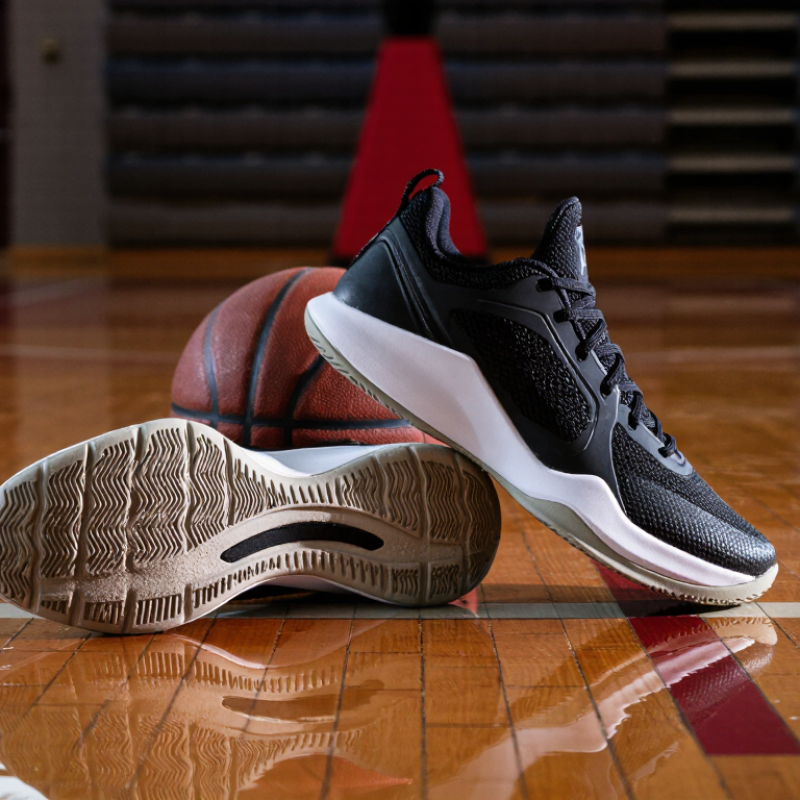
How to Tell If Top China Basketball Shoes Have Good Traction
Traction controls how confidently a player stops, cuts, and accelerates. It comes from rubber compound, outsole pattern, surface contact, and court cleanliness. The NCAA Injury Surveillance Program has reported basketball injury rates near 9 injuries per 1,000 athlete-exposures, depending on season and athlete group. Many incidents involve the lower extremities, where unstable foot movement can affect the ankle, knee, and hip. Good traction cannot prevent every injury, but it can support more controlled movement.
A reliable outsole should grip during a sharp stop without feeling glued to the floor. Excessive grip can also increase twisting forces. That detail is often ignored. ISO 13287 footwear testing measures slip resistance under controlled conditions, yet laboratory results cannot fully represent dusty courts, humid gyms, or worn surfaces. Check the outsole after several sessions. Smooth patches, flattened grooves, or uneven wear can reduce traction quickly. My own testing preference is simple: perform short sprints, lateral cuts, and hard stops before judging the shoe. One drill is not enough.
Tips: Test on the actual court when possible. Wipe the outsole during play. Avoid judging grip from appearance alone. Compare traction when the floor is clean and slightly dusty. If the shoe squeaks loudly but slides during a cut, the sound is misleading. Traction needs control, not noise.
| Traction Factor | What to Inspect | Practical Reference | Why It Matters | Simple Evaluation Method |
|---|---|---|---|---|
| Outsole Rubber Coverage | Check whether rubber covers the main forefoot, heel, and pivot areas instead of leaving large exposed foam sections. | High coverage is generally preferable for frequent cuts and stops. | More rubber in contact with the floor can improve durability and maintain grip in high-wear zones. | Inspect the outsole from below and confirm that the forefoot edge, medial pivot area, and heel strike zone have continuous rubber protection. |
| Tread Pattern Direction | Look for multidirectional grooves, such as herringbone, radial, or strategically crossed patterns. | Multidirectional coverage is useful for forward, lateral, and rotational movements. | Basketball movement changes direction quickly; a single-direction pattern may provide less consistent grip during side steps and pivots. | Trace the grooves visually and check whether they support both lateral movement and forward braking. |
| Groove Definition and Edge Sharpness | Examine whether the tread channels are clearly separated and whether the contact edges are well defined. | Deep, cleanly molded grooves usually offer better mechanical engagement than shallow, crowded lines. | Defined edges help the outsole interact with the floor and create pathways for dust and small debris to move away from contact areas. | Run a fingertip across the tread. The pattern should feel clearly raised and should not be almost flat or filled with molding flash. |
| Rubber Compound and Surface Feel | Assess whether the outsole rubber feels resilient and slightly tacky rather than excessively hard, brittle, or plastic-like. | A balanced compound should provide grip without becoming excessively soft or wearing quickly. | Compound formulation strongly affects friction, durability, and performance on clean versus dusty floors. | Press the outsole lightly with a finger and compare the feel across different sections. Avoid judging traction from softness alone. |
| Indoor Court Performance | Test the shoes on a clean, dry wood or synthetic indoor court using controlled stops and pivots. | Good traction should allow a firm stop without uncontrolled sliding. | Indoor basketball floors provide the most suitable conditions for evaluating a court-focused outsole. | Perform progressive lateral shuffles, a controlled jump stop, and a slow pivot. Increase force gradually rather than testing with an immediate maximum-effort slide. |
| Dust Tolerance | Observe how quickly the outsole loses grip after contact with a dusty court. | Better dust management means traction returns after a short wipe or a few steps. | Dust can form a thin layer between rubber and flooring, reducing direct contact and making stops less predictable. | Repeat the same stop after several movements in a dusty area, then wipe the outsole once and compare the grip. |
| Wet-Floor Behavior | Check whether the tread has channels that can move moisture away from the contact surface. | Basketball shoes are primarily designed for dry courts; wet floors should be treated as hazardous. | Water can sharply reduce friction and make sudden changes of direction unsafe, even when the outsole performs well indoors. | Do not use a wet-floor test as a normal performance test. If moisture is present, stop playing and dry the floor and outsole first. |
| Pivot-Zone Stability | Inspect the circular or segmented tread area under the forefoot and the medial side of the shoe. | A stable pivot zone should grip while allowing controlled rotation rather than abrupt sticking. | Basketball pivots place high torsional loads on the forefoot. Excessive slipping reduces control, while excessive sticking may increase rotational stress on the body. | With the foot planted, perform a slow controlled pivot and note whether the shoe rotates smoothly without sudden breaks in contact. |
| Traction Consistency Across the Outsole | Compare grip at the toe, forefoot, medial edge, lateral edge, and heel. | Consistent grip is more valuable than one exceptionally sticky section. | Players use multiple contact points during acceleration, braking, defensive slides, and landing. | Test several movement directions and check for unexpected slipping from one part of the outsole. |
| Wear Resistance of the Tread | Look for early rounding of tread edges, smooth patches, cracking, or rapid loss of groove depth. | Traction should remain predictable as the outsole wears; performance normally declines when grooves become visibly shallow. | Worn rubber reduces effective tread geometry and can make grip less reliable, especially during hard stops. | Photograph the outsole before use and compare it after several sessions. Pay particular attention to the forefoot and heel. |
| Court-Specific Suitability | Match the outsole design to the playing surface and usage conditions. | Non-marking, flexible rubber is commonly preferred for indoor courts; harder, more abrasion-resistant rubber may suit outdoor concrete. | Indoor and outdoor surfaces differ in smoothness, dust, abrasion, and temperature, so the same outsole cannot perform identically everywhere. | Choose shoes according to the actual court type and avoid assuming that an indoor traction pattern will last on rough outdoor surfaces. |
| Break-In Behavior | Notice whether grip improves slightly after the factory surface film wears away, without requiring prolonged use. | A short, normal break-in period can be acceptable; persistent slipping is a warning sign. | Manufacturing residue or a very smooth initial surface may temporarily affect contact, but fundamental tread design cannot be fixed by break-in. | Clean the outsole with a damp cloth, allow it to dry, and test again. Do not use oil, solvents, or aggressive abrasion. |
| Independent Traction Evidence | Review tests that identify the court type, floor condition, outsole compound, and testing method. | Repeatable observations are more useful than a single “very grippy” rating. | Traction is affected by dust, humidity, flooring, player weight, movement style, and outsole wear; context is essential. | Prefer reviews with multiple court sessions and specific descriptions of stopping, lateral movement, pivoting, and dust performance. |
Test each pair on clean hardwood, dusty hardwood, and textured outdoor concrete. Use identical socks, similar lacing tension, and the same player. Record hard stops, lateral cuts, and one-foot pivots. Test gradually.
A strong outsole should create a quick, quiet stop. Your knee should not twist inward during braking. Record any sliding distance in centimeters. Small movements matter.
Walk across a dusty area, then repeat sprints and lateral cuts. Inspect the outsole for a gray film after movement. Dust buildup can cause sudden slipping. That detail matters.
No. A clear squeak may suggest grip, but silence does not prove poor traction. Court dust, humidity, body weight, and movement style affect sound. Judge control, not noise alone.
Use diagonal cuts, short sprints, and controlled stops. Check whether the rubber bites during sideways movement. Softer rubber may grip well but wear quickly on rough concrete. Outdoor floors are demanding.
Look for deep grooves and closely spaced patterns. The rubber should feel firm, not brittle. A flat outsole may slide on dusty courts. Aggressive patterns can collect dust.
Rate initial bite, stopping control, lateral grip, and dust resistance from one to five. Record results after the first plays and again after thirty minutes. One score cannot explain everything.
No. Controlled friction testing is more precise than home observation. Use slow-motion phone video to reveal small slides. Keep court temperature consistent, and let shoes acclimate indoors for twenty minutes. My first comparison failed.
Good traction is essential in top China basketball shoes because it helps players stay balanced, accelerate confidently, and control every movement on the court. To learn how to tell if basketball shoes have good traction, start by examining the outsole pattern and rubber compound. Deep, well-spaced grooves can improve flexibility and grip, while a durable rubber compound should maintain contact without feeling overly stiff. The outsole should also match the type of court where the shoes will be used.
Testing traction on clean indoor courts, dusty surfaces, and outdoor courts can reveal how consistently the shoes perform. Pay attention to whether the soles squeak, slide, or collect dust. During stops, cuts, defensive slides, and quick direction changes, good traction should feel secure without causing uncomfortable sticking. Finally, compare several China basketball shoe models under the same conditions, focusing on braking control, lateral stability, and grip over time. This approach provides a more reliable assessment than judging traction by appearance alone.
