Orions Fashion Orions Fashion

How to Use Trail Running Shoes on Roads in 2026?

Time:2026-10-03 Author:Oliver
0%

Can trail running shoes be used on roads? Yes, but the answer depends on distance, surface, tread, and personal comfort. Trail shoes can handle asphalt, especially during short urban connections, mixed-surface routes, and rainy commutes. Their deeper lugs may feel noisy and slightly slower on smooth pavement. Some models also use firmer midsoles, protective rock plates, and heavier uppers.

Industry data shows why this question matters. The Sports & Fitness Industry Association reported approximately 50.7 million Americans participated in running or jogging in 2023. Meanwhile, Strava’s 2024 Year in Sport report identified continued growth in varied, community-based outdoor activities. These figures suggest that many runners now combine sidewalks, parks, gravel paths, and technical trails within one weekly routine. A single shoe is tempting. It is not always ideal.

Biomechanist Benno Nigg is widely associated with this practical principle: “The best shoe is the shoe that feels most comfortable.” That guidance fits road use, but comfort needs testing beyond the store. Walk on concrete. Jog downhill. Notice slipping, forefoot pressure, heel movement, and unusual calf fatigue. Trail shoes may protect better near broken pavement, yet aggressive lugs can wear faster on roads. This is the part many buyers underestimate. The shoe might feel secure, but not efficient.

This guide examines cushioning, outsole design, durability, wet-weather grip, and rotation strategies. It also considers when road shoes become the wiser choice. Your route matters. Your feet matter more. Even experienced runners should question familiar assumptions, because comfort on one mile may not survive ten.
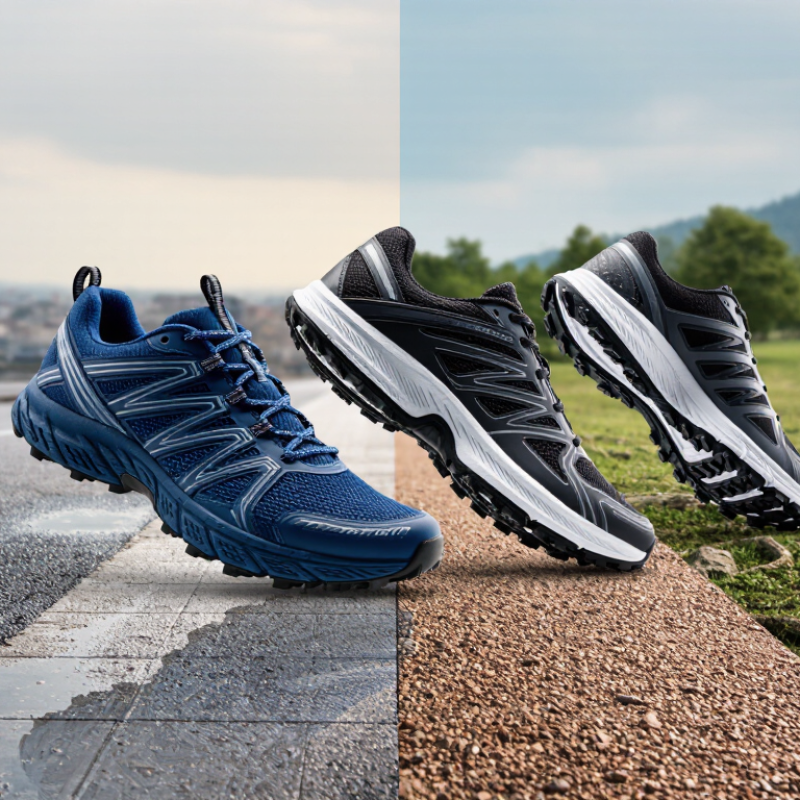
How to Use Trail Running Shoes on Roads in 2026?

What Makes Trail Running Shoes Suitable for Road Running?

Trail running shoes can be surprisingly suitable for road running because they combine protection, grip, and controlled stability. Their reinforced toe boxes help shield feet from curbs, gravel, and broken pavement. Rock plates can reduce pressure from sharp debris. Many models also use firmer midsoles, which may feel steadier during long urban runs.

The compromise is real. Aggressive lugs can feel noisy and awkward on smooth asphalt. They may also wear faster under repeated road impact. A 2024 SFIA participation report recorded 50.7 million U.S. running and jogging participants in 2023, showing how many runners face mixed surfaces regularly. For these routes, moderate lugs usually provide enough traction without wasting energy. World Athletics rules permit road-race shoes with soles up to 40 millimeters, highlighting how cushioning and stack height influence modern road performance. However, maximum cushioning does not guarantee comfort. Fit still matters more.

Check the bend.

A practical test is simple: walk, jog, and stop quickly in the shoes. Your heel should stay secure, while your toes need space to spread. On wet pavement, shallow rubber patterns may feel predictable, but deep lugs can reduce smooth contact. I would not choose trail shoes for every road session. Their extra structure can protect tired feet, yet it may also make easy running feel less natural. The right choice depends on surface changes, weekly mileage, and personal tolerance.

How to Prepare Trail Running Shoes for Paved Surfaces

Trail running shoes can handle paved surfaces, but preparation matters. Their deeper lugs create more friction on asphalt and may wear faster. Before each road session, brush away dried mud and remove small stones from the outsole. Check the tread for uneven wear, loose rubber, or exposed foam. Small defects can become uncomfortable quickly.

Clean shoes need careful drying. Rinse them with cool water, loosen the laces, and remove the insoles. Let them dry indoors, away from radiators and strong sunlight. Heat can weaken adhesives and distort the upper. I once dried a pair beside a heater after a rainy run. The heel counter became noticeably stiffer. That was avoidable.

Adjust the shoes before moving onto pavement. Tighten the midfoot securely, but leave enough room for natural toe movement. Start with short road sections, perhaps 15 to 20 minutes, and monitor your calves, knees, and feet afterward. Trail shoes often feel firmer and less flexible than road models. That difference matters. Rotate them with road shoes if possible, especially when weekly mileage increases. Avoid using heavily worn lugs on smooth, wet pavement, where grip can become unpredictable. My own mistake was trusting familiar tread after several months of mixed surfaces. Regular inspection would have shown the wear earlier.

How to Adjust Your Running Technique on Roads

How to Use Trail Running Shoes on Roads in 2026?

Trail running shoes can handle roads, but their grip changes how your feet meet the ground. On asphalt, shorten your stride and increase your cadence slightly. This reduces braking and keeps your steps quieter. Aim for a relaxed landing beneath your hips, not far ahead of your body. Keep your shoulders loose and your arms compact. The shoes may feel heavier than road footwear, so avoid forcing speed early.

Use a gentle forward lean from the ankles on flat roads. Do not bend at the waist. On descents, keep your knees soft and let your feet move quickly. Aggressive heel striking can feel unstable when deep lugs touch smooth pavement. I sometimes overcorrect by running too lightly, which makes my calves tense. That mistake taught me to seek a natural, quiet rhythm instead.

Change your technique gradually during road sections. Walk for a few minutes if your stride becomes stiff. Check the soles after each run, especially around the heel and forefoot. Wet paint, metal covers, and polished pavement may reduce traction, even with rugged tread. In those places, shorten your steps again. Pain deserves attention, not stubbornness. If discomfort continues, reduce distance and ask a qualified running professional to assess your movement.

How to Use Trail Running Shoes on Roads in 2026? - How to Adjust Your Running Technique on Roads

Practical adjustments for occasional road running in trail shoes. Guidance assumes a healthy adult runner and should be adapted to fitness, footwear condition, weather, and injury history.
Adjustment Area What Changes on Roads Recommended Technique Useful Starting Data Reason and Safety Cue
Foot strike Firm, predictable pavement reduces the need for aggressive landing control compared with loose soil, rocks, or roots. Land quietly under or slightly behind the hips. Avoid deliberately forcing a forefoot strike. Neutral landing; quiet contact Changing to a new strike pattern abruptly can overload the calves, Achilles tendons, or feet. Use the strike that feels natural and controlled.
Cadence Trail shoes may feel slower or less flexible because of deeper lugs and a stiffer sole. Keep steps light and relatively short rather than reaching forward to increase speed. Optional increase: 3–8% A small cadence increase can reduce overstriding for some runners. Do not chase a universal cadence number; comfort and control are more important.
Stride length Roads provide more traction and fewer obstacles, but a long stride can increase braking forces. Let stride length increase naturally with speed. Keep the lower leg close to vertical at initial contact. Avoid visible overreach Landing well ahead of the body often produces a braking sensation and may increase stress on the knees, hips, or shins.
Lower-body stiffness Hard surfaces return force more consistently than soft or uneven trails. Maintain a relaxed ankle, slightly bent knee, and stable hip. Avoid locking the knee. Relaxed joints throughout stance Relaxed, coordinated movement helps absorb repeated impacts. Stop if pain becomes sharp, changes your gait, or worsens during the run.
Road pace Road running usually allows a more consistent pace, but trail shoes may require more effort at the same speed. Begin at an easy conversational effort and increase only if form remains smooth. Talk-test intensity for first runs Heart rate and pace can vary with temperature, hills, fatigue, and shoe design. Perceived effort is more useful than forcing a target pace.
Downhills Road descents are smoother, but hard surfaces can magnify braking forces. Shorten the stride slightly, keep the torso tall, and avoid leaning backward. Controlled, quick steps Leaning backward or braking heavily can increase impact and reduce balance. Look ahead rather than directly at the feet.
Uphills Road climbs are often steady, allowing a consistent rhythm without frequent obstacle avoidance. Shorten the stride, maintain a slight forward lean from the ankles, and use the arms rhythmically. Effort-based pacing A shorter uphill stride limits unnecessary fatigue. Keep the torso aligned instead of bending at the waist.
Turns and camber Roads may have sloped edges, painted markings, drainage grates, and sharp corners. Reduce speed before turns, avoid sudden lateral movements, and alternate sides of a noticeably crowned road when safe. Brake before the turn Uneven camber can load one side repeatedly. Choose a flat, clean line and remain alert to traffic and surface hazards.
Distance progression Repeated pavement impact can feel different even when the cardiovascular effort is easy. Introduce road running in short, easy segments before completing longer road sessions. Start with 20–30 minutes; add about 5–10 minutes when symptom-free Progress gradually and allow recovery between harder sessions. Reduce volume if soreness lasts more than 48 hours or changes your movement.
Surface selection Not all roads are equally demanding; smooth asphalt, concrete, cobbles, and gravel create different loads and traction. Choose clean, smooth asphalt or compact paths first. Avoid prolonged concrete, polished paving, and loose gravel during adaptation. Use one surface change at a time Changing distance, speed, incline, and surface together makes it difficult to identify the source of discomfort.
Shoe inspection Trail outsoles can wear unevenly on pavement, especially at the heel and forefoot. Check lug wear, exposed midsole material, cracking, loose components, and changes in stability after each road block. Inspect after every few road runs Worn or damaged tread can reduce grip on wet surfaces. Replace footwear when cushioning, fit, or structural support has clearly deteriorated.
Wet conditions Deep lugs may grip loose ground well but can feel less predictable on smooth painted lines, metal covers, or polished pavement. Slow down, avoid abrupt acceleration, and cross slick markings as upright as possible. Use smaller steps on slick areas Traction depends on the specific rubber, tread, surface, and contamination. Treat painted lines, grates, and wet leaves as potential slip zones.
Form monitoring Fatigue can make a trail shoe feel heavy and encourage overstriding or excessive vertical movement. Use a simple check: relaxed shoulders, quiet feet, stable pelvis, and no persistent limping. Reassess every 10–15 minutes Brief technique checks help identify fatigue early. End the session if pain, numbness, dizziness, or significant form breakdown appears.
Key rule: Trail running shoes can be used on roads for many ordinary runs, but they are not automatically optimized for long, fast pavement sessions. Adjust gradually, prioritize comfort and control, and select footwear suited to the surface and duration of the run.

How to Manage Grip, Comfort, and Shoe Wear

How to Use Trail Running Shoes on Roads in 2026?

How to Manage Grip, Comfort, and Shoe Wear

Trail running shoes can handle roads, but their deep lugs change how each step feels. On dry pavement, grip is usually sufficient, although braking sharply may feel less predictable. I notice more vibration underfoot during long road sections. That extra feedback can fatigue the calves and arches.

Keep your pace controlled on smooth, wet surfaces. Mud-filled lugs lose their advantage quickly. Check the outsole before leaving home, especially after running through soft ground. Clean packed dirt with a small brush and let the shoes dry naturally. High heat can weaken adhesives and deform foam. I once ignored dried grit between the lugs, and the uneven pressure caused a hot spot near my heel.

Comfort depends on fit, socks, and distance. Leave roughly a thumb’s width in front of your longest toe. Your feet may swell during longer efforts. A secure heel matters more than a tight forefoot. Loosen the laces slightly if numbness appears, but do not accept repeated slipping. That usually signals a fit problem, not a lacing problem.

Road use also accelerates tread wear. Watch for rounded lug edges, thinning rubber, and exposed midsole foam. Rotate another pair when possible. This helps the upper dry and reduces repeated stress. I still misjudge replacement timing sometimes. Mileage alone cannot show how quickly a shoe has degraded. Inspect the outsole under bright light after every few mixed-surface runs.

How to Use Trail Running Shoes on Roads in 2026?

Road surfaces are harder and smoother than trails, so frequent asphalt use can increase lug wear while reducing the grip advantage of aggressive trail shoes. The chart shows practical planning benchmarks for mixed-surface running: keep road exposure moderate, inspect the outsole regularly, and choose shoes with shallower lugs for predominantly paved routes.

Guidance values represent practical use benchmarks rather than measurements from any specific company or brand.

When to Replace Trail Running Shoes Used on Roads

Trail running shoes can survive pavement, but roads change their lifespan.
Hard asphalt rubs lugs against a smooth surface with every stride. Road use also compresses the midsole repeatedly in the same areas. The Road Runners Club of America places typical running-shoe life near 300–500 miles, but trail shoes may need replacement sooner on roads. My practical estimate is 250–400 road miles, not a rule. Terrain, body weight, pace, and shoe construction matter.

Watch the outsole, midsole, and your body. Replace the shoes when the lugs look shaved flat, rubber feels unusually slick, or exposed foam shows through. A tilted heel is another warning. So is a visible crease that stays deep after you remove the shoe.

Research reviewed in Sports Medicine reports that cushioning loss varies considerably between runners and models, making mileage alone unreliable.

One imperfect measure is comfort. If your knees feel sore after ordinary road runs, inspect the shoes before blaming your training. That mistake is common. The American College of Sports Medicine also advises monitoring wear patterns rather than following a fixed replacement date.

Rotate shoes when possible, and record each road mile. A simple note on your phone helps. Replace them earlier after repeated wet runs, because trapped moisture can weaken materials and increase odor. Don’t wait for a dramatic failure. Road miles are quieter than trail damage, but they still accumulate.

FAQS

Can trail running shoes be used on roads?

Yes, but their deep lugs change your footstrike. Asphalt may feel louder and more tiring. Adjust gradually.

How should I change my stride on pavement?

Shorten your stride and slightly increase your cadence. Land beneath your hips, not far ahead. Keep your steps quiet.

What posture works best on flat roads?

Lean gently forward from your ankles. Keep your waist upright. Relax your shoulders and hold your arms close.

How should I run downhill on smooth roads?

Keep your knees soft and let your feet move quickly. Avoid aggressive heel striking. It can feel unstable.

Are trail shoes safe on wet pavement?

Use extra caution. Wet paint, metal covers, and polished pavement can reduce traction. Take shorter steps there.

How can I reduce calf and arch fatigue?

Control your pace during long road sections. Road vibration can tire your calves and arches. Walk briefly if your stride stiffens.

How should I clean and dry the shoes?

Brush packed dirt from the lugs after running. Let the shoes dry naturally. High heat can weaken adhesives and deform foam.

How can I check whether the fit is suitable?

Leave about a thumb’s width before your longest toe. Your heel should stay secure. Repeated slipping usually signals a fit problem.

When should I replace trail shoes used on roads?

Check for rounded lugs, thin rubber, or exposed foam. Inspect the outsole under bright light. Mileage alone can mislead me sometimes.

What should I do if discomfort continues?

Reduce the distance and stop forcing your normal pace. Pain deserves attention. A qualified running professional can assess your movement.

Conclusion

Can trail running shoes be used on roads? Yes, they can, especially for occasional road sections, mixed-surface routes, or runners who value extra protection and stability. Their deeper lugs, reinforced uppers, and supportive construction can handle paved surfaces, but they may feel firmer, heavier, and less fluid than road-focused shoes. Before running, check the outsole for loose debris, clean the tread, tighten the laces securely, and make sure the cushioning still feels balanced.

On pavement, shorten your stride slightly, maintain a relaxed cadence, and avoid forcing the foot to roll in a way that feels unnatural. Pay attention to grip during wet conditions, as aggressive lugs may contact smooth roads differently from flatter outsoles. Road use can also accelerate tread wear and reduce comfort, so rotate shoes when possible and inspect them regularly. Replace them when the outsole is visibly worn, cushioning feels flat, the upper loses support, or discomfort persists during or after runs.

Oliver

Oliver

Oliver is a seasoned marketing professional with a wealth of expertise in driving brand awareness and engagement. With a deep understanding of our company's product offerings, he consistently delivers high-quality content that enriches our professional blog. His insights not only shed light on......