Orions Fashion
Running shoes collect more than dust. Fine grit settles into the mesh, sweat lingers in the lining, and dried mud can stiffen the outsole. Knowing how to wash running shoes in washing machine safely starts with checking the care label. Some shoes tolerate a gentle machine cycle; others have delicate foam, glued layers, or materials that need hand-cleaning. A washer is convenient, but it is not always the right choice.
Sports podiatrist Dr. Alex Kor is a professional reference for foot-health context, but I could not verify a published quotation from him about machine-washing shoes. Rather than invent one, here is this guide’s practical rule: “Cold water. Gentle cycle. Air-dry.” Remove the laces and insoles, brush away loose dirt, then place the shoes in a mesh laundry bag with a few old towels. Use a small amount of mild detergent. Skip bleach, fabric softener, and hot water.
Small details matter. A rattling shoe can bang against the drum. Heat can deform foam or loosen adhesive. After washing, press the shoes with a clean towel and leave them to dry at room temperature. No dryer. This method can work for suitable shoes, but it cannot reverse worn cushioning or repair damaged glue. Check the manufacturer’s instructions, and be willing to choose hand-washing instead. A little caution helps.
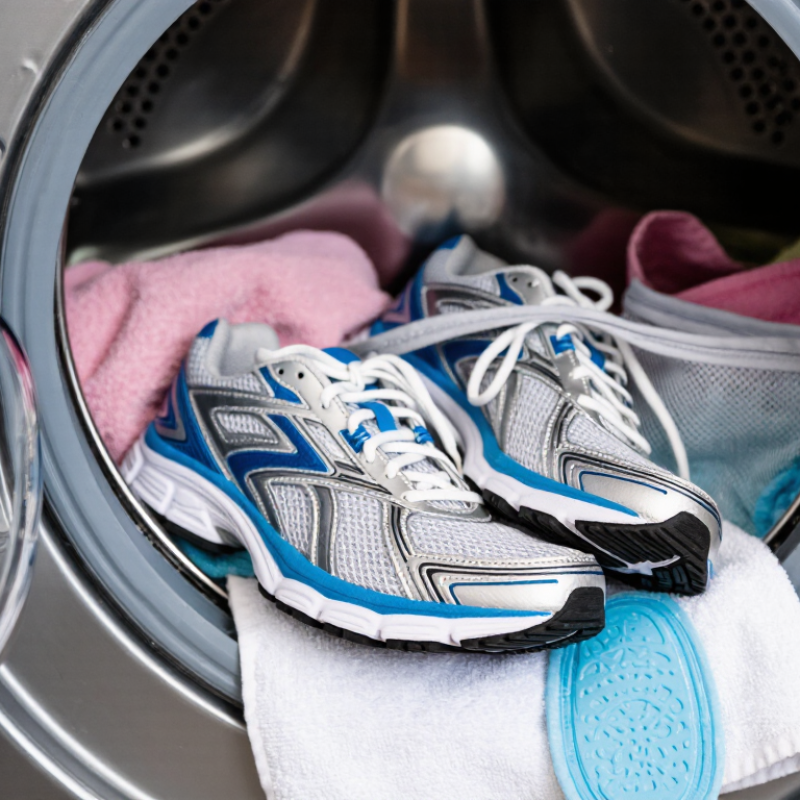
Before washing running shoes, check the care label or the maker’s care instructions. A machine-washable upper does not always mean the whole shoe is safe to wash. Some shoes contain glued layers, stiff support pieces, or foam that may weaken with soaking and spinning. Leather, suede, and waterproof coatings can also be damaged by machine washing. Look closely at the seams and sole edges. If the sole is separating or the foam is cracked, skip the washer. No care instructions? Treat that as a reason to be cautious, not as permission. A hand wash with a soft brush is often gentler.
Check the shoes’ condition, too. Frayed stitching and loose overlays may worsen in a moving drum. Remove the insoles and laces only if their care instructions allow it. If the shoes are approved for machine washing, place them in a mesh laundry bag and use a cold, gentle cycle with a small amount of mild detergent. Avoid bleach and fabric softener. Air-dry them away from direct heat; a warm radiator can warp materials. Even with careful preparation, a wash may change how a shoe feels. That part is easy to underestimate.
Remove the laces and insoles before washing running shoes. This gives water and detergent better access to the tongue and inner lining. It also helps the shoes keep their shape. Check the care label first, since some materials may not be suitable for machine washing. Put the laces in a small mesh laundry bag so they do not knot around other items. Insoles are often best cleaned separately by hand with mild soap and a damp cloth. Avoid soaking them if they contain foam, which can hold water for a long time.
Brush off loose dirt while the shoes are dry. Use a soft brush or an old toothbrush on the upper, seams, and tread. Pay attention to packed mud around the sole; it can spread through the wash and leave grit inside the drum. A few gentle taps over a bin can loosen dry soil. Don’t scrub aggressively, especially on delicate mesh. It is tempting to rush this step, but a quick pass may leave grit behind. Less grit, less mess. Check the grooves again before washing, and remove any small stones by hand.
A mesh laundry bag helps protect running shoes from repeated impacts inside the washer. Choose one large enough to hold the shoes without squeezing them together. Remove the laces and insoles first; wash them separately, or place them in a small mesh pouch. Brush off dried mud and grit over a bin. Small stones can scratch the drum.
Put the shoes in the bag, then add two or three old towels to balance the load. Keep the towels similar in weight, and avoid washing one shoe by itself. An uneven load can thump during the spin cycle and strain the machine. I once assumed the bag alone would prevent banging. It didn’t. The towels made a noticeable difference, though every washer behaves a little differently.
Check the shoe care label before washing. If machine washing is allowed, use cold water, a gentle cycle, and a small amount of mild detergent. Skip fabric softener, which can leave residue. Stop the cycle if the load knocks loudly. Afterward, reshape the shoes and let them air-dry away from direct heat. The mesh bag reduces scuffing; it does not make every shoe washer-safe.
Protect shoes in a mesh bag and balance the washer load with a few towels.
Use one pair of shoes per wash. Place them in a mesh laundry bag, then add two or three towels to help balance the load and reduce banging. Choose a gentle cycle with cold water; check the shoe care label first.
Choose a gentle cycle, cool water, and mild detergent. Remove the laces and insoles first; wash them separately by hand. Knock dry mud from the soles, then wipe away grit with a soft brush. Place the shoes in a mesh laundry bag, with a few old towels to soften banging. Use only a small amount of detergent. Too much can cling to mesh and foam.
Cool water is kinder to shoe materials and uses less energy for heating. ENERGY STAR estimates that heating water accounts for about 90% of the energy used by a clothes washer. Choose the shortest gentle setting, and skip bleach and fabric softener. A 2016 study in Marine Pollution Bulletin measured up to roughly 730,000 fibers released from acrylic fabric in one wash. It did not test shoes, so that figure is not a shoe-specific estimate; it is a useful reminder that synthetic materials can shed fibers.
Check the care label before washing. If it advises against machine cleaning, follow it. I would not call any cycle risk-free: worn seams or old adhesive may loosen, even in cool water. After washing, reshape the shoes and air-dry them away from direct heat. The dryer is tempting, but high heat can distort materials. Let them dry fully. Then check for lingering odor or dampness before wearing them again.
Patience matters after a machine wash. Remove the insoles and laces, then blot the shoes with a clean towel. Set each part in a shaded, well-ventilated spot. Keep shoes away from radiators, direct sun, and hot-air dryers; heat can warp foam and weaken adhesives. A fan nearby helps air move without blasting the material.
Check the tongue, toe box, and stitching, not just the surface. Press a dry paper towel inside; damp patches mean the shoes need more time. The U.S. Environmental Protection Agency advises drying water-damaged materials within 24–48 hours to help limit mold growth. That guidance concerns buildings, not footwear, so treat it as a moisture warning rather than a shoe-specific deadline. Shoes may need longer.
Don’t rush it. I still find this step easy to underestimate. Refit the insoles only when both the lining and insoles feel dry, with no cool, clammy spots. Then lace loosely and wear the shoes briefly at home. If they feel damp or smell musty, take them off and let them air longer. A slightly inconvenient wait beats trapping moisture against your feet.
Check the care label or care instructions. A washable upper does not mean the whole shoe can be washed. Leather, suede, and waterproof coatings may be damaged.
No. Loose stitching, separating soles, or cracked foam may worsen in a moving drum. Hand-wash them with a soft brush instead.
Remove the laces and insoles only if their care instructions allow it. Wash them separately. Brush dried mud and grit over a bin; small stones can scratch the drum.
Put the shoes in a roomy mesh bag. Add two or three similar-weight old towels to balance the load. Avoid washing one shoe alone. A bag cannot guarantee safety.
Choose cold water, the shortest gentle cycle, and a small amount of mild detergent. Skip bleach and fabric softener. Too much detergent can cling to mesh and foam.
It reduces impacts, but may not stop them. I once thought the bag alone would prevent loud knocks. It didn’t. Towels helped, though washers vary.
Reshape them and air-dry away from direct heat. A radiator or dryer can distort materials. Let them dry fully, then check for dampness before wearing.
Yes. Worn seams or old adhesive may loosen, even on a gentle cycle. A 2016 study measured fibers from acrylic fabric, not shoes; its figure is not a shoe-specific estimate.
Learning how to wash running shoes in washing machine starts with checking the care label and materials. Some shoes may be damaged by machine washing, so clean them by hand if the manufacturer advises against it. Before washing, remove the laces and insoles, then brush away loose dirt and debris. Place the shoes and laces in a mesh laundry bag to protect them, and add a few towels to help balance the washer load.
Choose a gentle cycle with cool water and a small amount of mild detergent. Avoid harsh settings and hot water, which can weaken materials or affect the shoes’ shape. Once the cycle is complete, let the shoes, laces, and insoles air-dry fully in a well-ventilated spot. Keep them away from direct heat, and reassemble them only when every part is completely dry.
