A marathon asks the body to repeat the same movement for hours, often as fatigue builds and pace becomes harder to hold. That is why many runners look beyond cushioning alone when choosing race-day shoes. Carbon plate models combine a stiff plate with responsive foam, creating a shoe designed to feel efficient during forward motion. The experience can be noticeable: a firm sensation under the forefoot, a lively rebound, and a rocker shape that encourages a smooth roll through each stride.
So, why do marathon runners use carbon plate shoes? Some research suggests that certain shoe designs can improve running economy for some athletes, but results vary by runner, model, and pace. The plate is only one part of the system; foam, geometry, fit, and a runner’s mechanics also matter. These shoes do not automatically make someone faster, and they cannot replace consistent training, sound pacing, or adequate recovery. Not a guarantee.
Comfort matters over 26.2 miles. A shoe that feels quick for a short test may cause pressure, instability, or discomfort later in a long run. Runners should test a model during training and pay attention to how it feels when tired, not just when fresh. That distinction is easy to miss. This guide explores the practical reasons marathoners choose carbon plate shoes, what the technology may offer, and where expectations should stay realistic. The best choice is the one that suits the runner, not simply the one with the boldest claims.
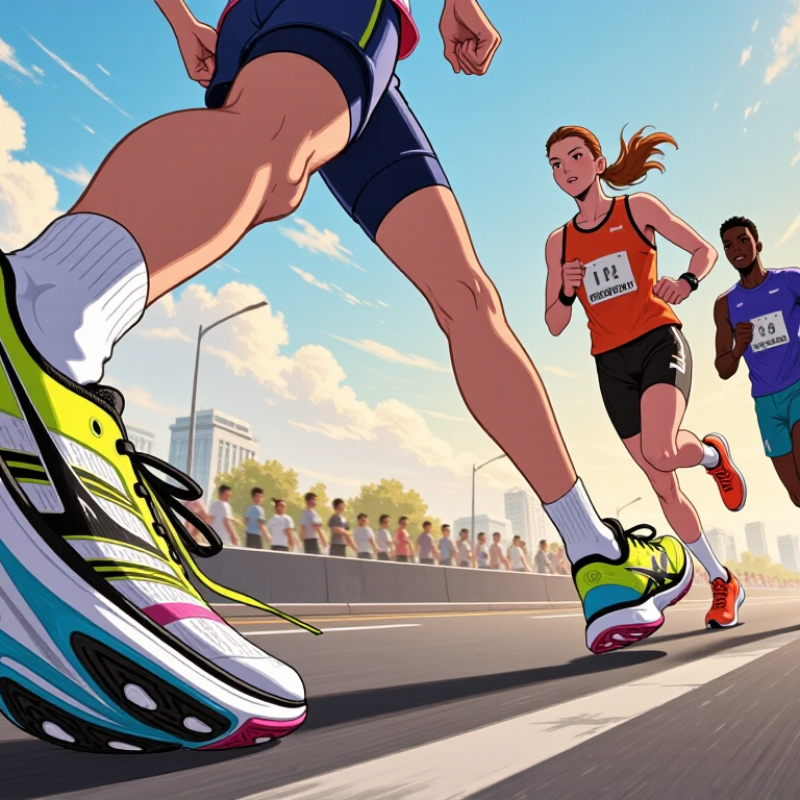
How Carbon Plate Shoes Work
Carbon plate shoes work through the interaction of a stiff plate, responsive foam, and a curved sole. The plate sits inside the midsole, usually beneath the foot. As the runner lands, the foam compresses and absorbs some impact. The plate limits bending through the forefoot, while the curved shape encourages a smoother roll toward toe-off. It is a coordinated design, not a hidden motor.
The plate does not create energy or push every runner forward by itself. Instead, its stiffness can reduce how much the toes bend at push-off, while the foam compresses and returns some energy. The rocker shape may also help the foot move through the stride. Small details matter: the runner’s pace, stride, and shoe fit can change how the setup feels. Not magic.
Some runners notice a firmer, quicker transition; others find the shoe awkward, especially at slower paces or around tight turns. A stiff forefoot can also shift the feeling of effort toward the calves or feet, though responses vary. Try the shoes gradually in training, and pay attention to pressure under the toes or rubbing at the heel. The science explains the design, but it does not guarantee a better race. A less obvious point: comfort still counts.
How Carbon Plates Improve Running Economy
Running economy measures how much oxygen or energy a runner uses at a given pace. In a 2018 study in Sports Medicine, Hoogkamer and colleagues tested 18 trained male runners. They reported roughly 4% better running economy in a plated, highly cushioned shoe than in conventional racing flats. Small gains matter. But this was a laboratory result, not a promise of faster marathon times.
The researchers tested a complete shoe design, not the carbon plate in isolation. Foam, plate stiffness, and shoe geometry can all influence how force moves through a stride. A stiff plate may reduce bending at the toes, while cushioning can help return energy. The exact contribution of each feature remains difficult to separate. The response also varies: a shoe that feels efficient at an easy pace may feel awkward late in a long run.
Tips: Test the shoes during several training runs, including a steady long run. Notice comfort, calf fatigue, and how your feet feel the next morning. Fit still matters. If discomfort persists, the small lab-tested efficiency gain may not be worth it.
How Foam and Plate Design Support Marathon Pace
Foam and plate design work together, but they do different jobs.
Soft, resilient foam compresses underfoot and returns some energy as it rebounds. A curved carbon plate stiffens the shoe and can help guide the foot through toe-off. At marathon pace, this may make each step feel smoother, especially late in a race when tired legs begin to drag.
The plate does not create energy. Fit matters more.
A 2018 study by Hoogkamer and colleagues tested 18 trained male runners at 14.5 km/h. One prototype shoe reduced the energetic cost of running by about 4% compared with two conventional racing shoes. The authors linked the result to the combined shoe design, including its foam and curved plate—not the plate alone.
That is a useful finding, but it came from a small, specific test. Individual results vary.
World Athletics’ road-shoe rules set a 40 mm maximum sole thickness. This gives designers room for substantial foam, while the plate adds stiffness without replacing cushioning. Too much stiffness can feel awkward, though, and a shoe that feels fast for one runner may strain another’s calves.
Try it at marathon pace. Then listen to your legs.
How These Shoes May Reduce Leg Fatigue
Carbon-plated shoes may help reduce leg fatigue by lowering the energy needed to maintain marathon pace. In a 2018 study in Sports Medicine, elite runners used about 4% less energy in advanced footwear than in conventional racing shoes. The tested shoes combined a carbon-fiber plate with responsive foam, so the result cannot be credited to the plate alone. For a runner covering 42.2 kilometers, even a small efficiency gain may leave more energy for the final miles.
Less effort per stride does not mean less strain for every runner. Shoe geometry can change how the ankle and calf work, and unfamiliar shoes may feel awkward or tiring. The research does not prove that carbon plates prevent muscle damage or guarantee fresher legs. Fit, pace, training, and individual mechanics all matter. Small gains matter. But they are not a cure-all.
Tips: Test the shoes during long training runs, not on race morning. Notice calf tightness, hot spots, and how your legs feel the next day. If discomfort builds, reconsider the fit or shoe choice.
Top Reasons Why Marathon Runners Use Carbon Plate Shoes - How These Shoes May Reduce Leg Fatigue
| Factor |
How it may help during a marathon |
What research indicates |
Important limitation |
| Running economy |
A shoe’s plate, foam, and geometry work together and may lower the energy cost of maintaining a given pace. |
Some controlled studies of advanced plated shoes report improved running economy, but the size of the effect varies among runners and shoe designs. |
A carbon plate alone does not guarantee better economy; the foam and overall shoe construction also matter. |
| Foot and ankle mechanics |
The stiff plate and curved sole can change how the foot bends and rolls forward, potentially reducing work at some joints. |
Biomechanical studies show that plated-shoe designs can alter joint motion and the distribution of work across the lower limb. |
The effect is not simply a reduction in total leg work; loading may shift between the ankle, knee, and other tissues. |
| Impact cushioning |
Many carbon-plated racing shoes pair the plate with thick, resilient foam, which may make repeated steps feel more comfortable. |
Cushioning and comfort depend mainly on the complete midsole design and the runner’s response, not on the plate by itself. |
A softer or thicker shoe does not necessarily reduce impact forces or prevent injury for every runner. |
| Maintaining pace late in the race |
If a shoe improves efficiency or feels comfortable, it may help some runners sustain their chosen pace with less perceived effort. |
Performance benefits have been observed in some studies, but race outcomes also depend on training, pacing, nutrition, and conditions. |
Shoes cannot prevent fatigue caused by depleted energy stores, heat, dehydration, or excessive pacing. |
| Perceived leg fatigue |
A runner may feel less effort or discomfort when the shoe suits their stride and pace. |
Perceived fatigue is individual and is not the same as a direct measurement of muscle fatigue or tissue loading. |
A comfortable feel in a short test does not establish how the shoe will feel over the full marathon distance. |
| Adaptation and fit |
Gradual training in the shoe allows runners to assess fit, stability, and how it feels at marathon pace. |
Responses differ with running experience, gait, pace, and individual biomechanics. |
A shoe that feels unstable, uncomfortable, or unusually demanding should not be assumed to reduce fatigue. |
Takeaway: Carbon-plated shoes may improve running economy and comfort for some runners, which could help manage effort over long distances. They do not eliminate fatigue, and benefits vary by runner and shoe design.
Why Fit, Comfort, and Running Style Matter
A carbon plate can help, but fit decides whether its benefits feel usable over 42.2 kilometres. In a controlled study of 18 trained male runners, a shoe design combining a carbon-fibre plate with responsive foam improved running economy by about 4% compared with traditional racing flats. The researchers, Hoogkamer and colleagues, reported their findings in Sports Medicine in 2018. That result does not isolate the plate’s effect, or predict every runner’s experience.
Fit comes first. A secure heel, room for toes to spread, and no pressure across the midfoot matter more than a fast-looking shape. Feet often swell during long runs, so test shoes late in the day and at marathon pace. Small details matter. Notice rubbing, numbness, or heel lift before race day. Comfort is not a luxury; it helps you maintain your stride when fatigue sets in.
Running style matters, too. A stiff shoe may feel smooth for one runner and awkward for another, especially during turns or at slower paces. Try it on familiar long runs, not just short shop tests. Pay attention to calves and ankles the next morning. I would not assume that a quicker feeling means a better match; sometimes the shoe simply feels unfamiliar.
Conclusion
Carbon plate shoes combine a stiff plate with responsive foam to guide the foot through each stride. The plate can help create a smoother transition from landing to toe-off, while the foam provides cushioning and energy return. Together, these features may improve running economy by helping runners maintain pace with less effort, particularly over long distances. Their design can also support a steady marathon rhythm when fatigue begins to build.
Why do marathon runners use carbon plate shoes? For some, the shoes may help reduce the feeling of leg fatigue and make it easier to sustain pace late in a race. However, their benefits depend on the runner. Fit, comfort, and individual running style all matter, and a shoe that feels unstable or uncomfortable may not be a good choice. Runners should consider how the shoes feel during training and choose a pair that works naturally with their stride.
 Orions Fashion
